Most corporate war games are a one-off event run from a generic script. Force Majeure runs business war gaming as a rerunnable simulation, generated against the sectors and countries you actually operate in and scored into a board-ready report.
Business war gaming puts a leadership team inside a competitive or crisis scenario and forces decisions under pressure, so strategy is stress-tested in the room rather than discussed on a slide. The method is sound, and executives know the vocabulary.
The usual delivery is the weak point. Most productized war games are a single facilitated event built on a generic script that fits any company and therefore none in particular. It runs once, the energy fades, and the world moves on while the exercise stays frozen.
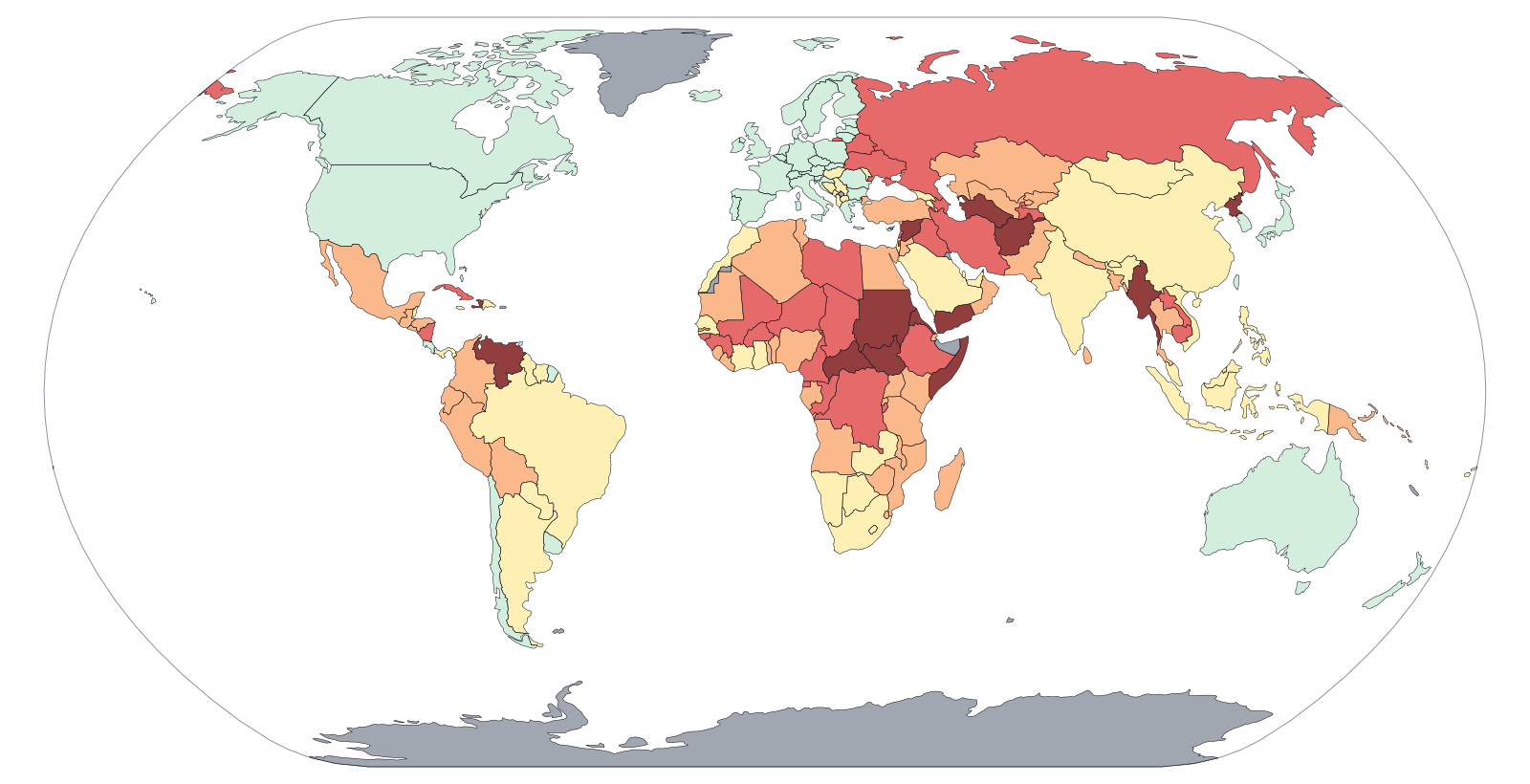
The war game is generated against your real operating geography, calibrated to real data such as V-Dem and ACLED, rather than a script that fits any firm.
The scenario set updates each quarter at low marginal cost, so the exercise tracks a fast-moving risk picture instead of going stale after a single session.
Decisions are graded on a published rubric that weighs financial and cultural judgment together, and the run is written up as a board-ready after-action report.
A slide-based scenario workshop talks through possible futures and ends in a deck that no one rereads. A Force Majeure war game is played: a leadership team works a crisis on its own footprint, the decisions are scored, and the result is a documented record rather than a discussion. Because the scenario set refreshes quarterly, the exercise lines up with the operational-resilience cadence a board now reports against instead of living as a one-time event. The judgment built into it was pressure-tested in the hardest markets on earth, calibrated to a 2021 Harvard Business Review finding by the authors that community-embedded firms were far more likely to stay profitable and to survive a crisis.
We are glad to map a Force Majeure war game against whatever scenario work you run today.
See the enterprise briefing →Business war gaming puts a leadership team inside a competitive or crisis scenario to test strategy under pressure rather than on paper. Most productized war games are a one-off facilitated event built on a generic script. Force Majeure runs it as a rerunnable simulation generated against your real sector and country footprint.
A slide-based scenario workshop discusses hypotheticals and ends in a deck. Force Majeure is played, scored on a published rubric, and written into a board-ready after-action report. It runs on your real footprint, is calibrated to data such as V-Dem and ACLED, and refreshes quarterly rather than living as a single event.
Yes. The scenario set is refreshed each quarter at low marginal cost, so the exercise tracks a fast-moving geopolitical and socio-political risk picture instead of going stale after one session. That cadence also lines up with operational-resilience expectations a board reports against.
See the full FAQ, the geopolitical risk training guide, or what a crisis simulation is.
Tell us your footprint and what you want the war game to test. We reply with a scoped brief.
Tell us your sector, footprint, and objective.
Thanks, your request is on its way to the Force Majeure team and we will be in touch shortly. If you would rather email us directly, use this link.