For the board

Show the board you have tested for the crisis that is coming.

When a regulator or a director asks whether the firm has tested this, most boards cannot show much. Force Majeure turns geopolitical and socio-political crisis into a facilitated exercise on your real footprint, scored into a report your committee can defend.

The board-level problem

The question is no longer whether you worry. It is whether you can show you tested.

A regulator or a fellow director asks the audit and risk committee a direct question: has the firm tested for this. Most boards cannot point to much beyond a policy and an annual cyber tabletop. Geopolitical and socio-political crisis sits at the top of the risk register and is rarely exercised on the footprint the company actually runs.

The stakes for directors have moved with it. Under regimes such as NIS2 and operational-resilience rules like DORA and the UK framework, directors now carry personal management duties for resilience. A verbal reassurance to a committee is thin cover. A documented, scored exercise is the record a board is expected to hold.


What a board-grade exercise looks like

A facilitated session, scored into a report the board can read.

On your real footprint

Your sectors, your countries.

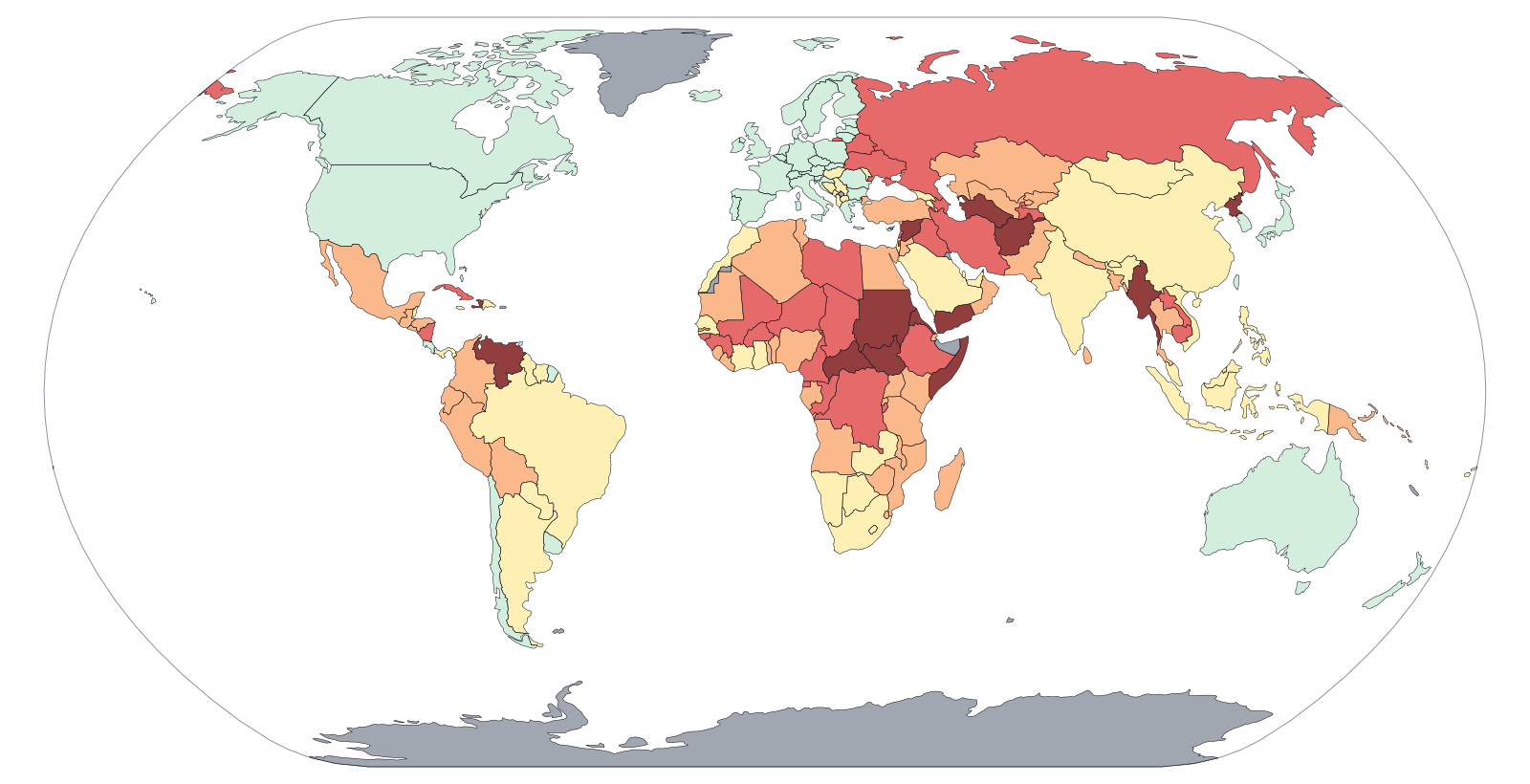
The scenario is generated against the markets the firm actually operates in, calibrated to real data such as V-Dem and ACLED, rather than a generic script.

Facilitated and scored

Decisions graded on a rubric.

Directors and executives work the crisis live. Every decision is scored on a published four-part rubric that weighs financial and cultural judgment together.

Board-ready output

An after-action report.

The session is written up as a board-ready after-action report showing where judgment held, where it broke, and what to fix before the real thing.


Why it satisfies oversight

Documented, rerunnable, and defensible to a committee.

An exercise only counts as oversight if you can produce it later. Each Force Majeure session ends in a written, scored record the audit and risk committee can file and a regulator can review. Because the scenario set refreshes, the exercise is rerunnable each quarter as conditions move, on the cadence operational-resilience expectations now assume rather than once a year. The output is mapped to the framework your committee reports against, so the work stands as evidence rather than anecdote. The judgment built into it was pressure-tested in the hardest markets on earth, calibrated to a 2021 Harvard Business Review finding by the authors on community-embedded firms in crisis.

We are glad to map Force Majeure against the oversight framework your board already reports to.

See the enterprise briefing →
Common questions

Board crisis readiness, briefly.

What does the board actually get out of it?

A board-ready after-action report. The session puts your directors and executives inside a geopolitical or socio-political crisis built on your real footprint, scores their decisions on a published four-part rubric, and writes up where judgment held and where it broke. The board leaves with a documented, defensible record that the firm has tested for the crisis, which carries far more weight with a committee than a verbal reassurance.

How long is a board session?

A focused board-grade exercise runs as a half-day facilitated session, sized to fit a committee agenda. A fuller bespoke engagement adds a custom scenario set built on your footprint and a longer facilitated day. The exercise is rerunnable, so it can be repeated each quarter as exposure shifts rather than once a year.

Does it map to our oversight duties and regulators?

Yes. Directors now carry personal management duties under regimes such as NIS2 and operational-resilience rules like DORA and the UK framework. The documented, rerunnable output is mapped to the framework your committee reports against, so the exercise stands as evidence the board can put in front of a regulator.

See the full FAQ, the geopolitical risk training guide, or the evidence behind the scoring.

Next step

Tell us your footprint and the question your board is being asked. We reply with a scoped brief.

Request a brief