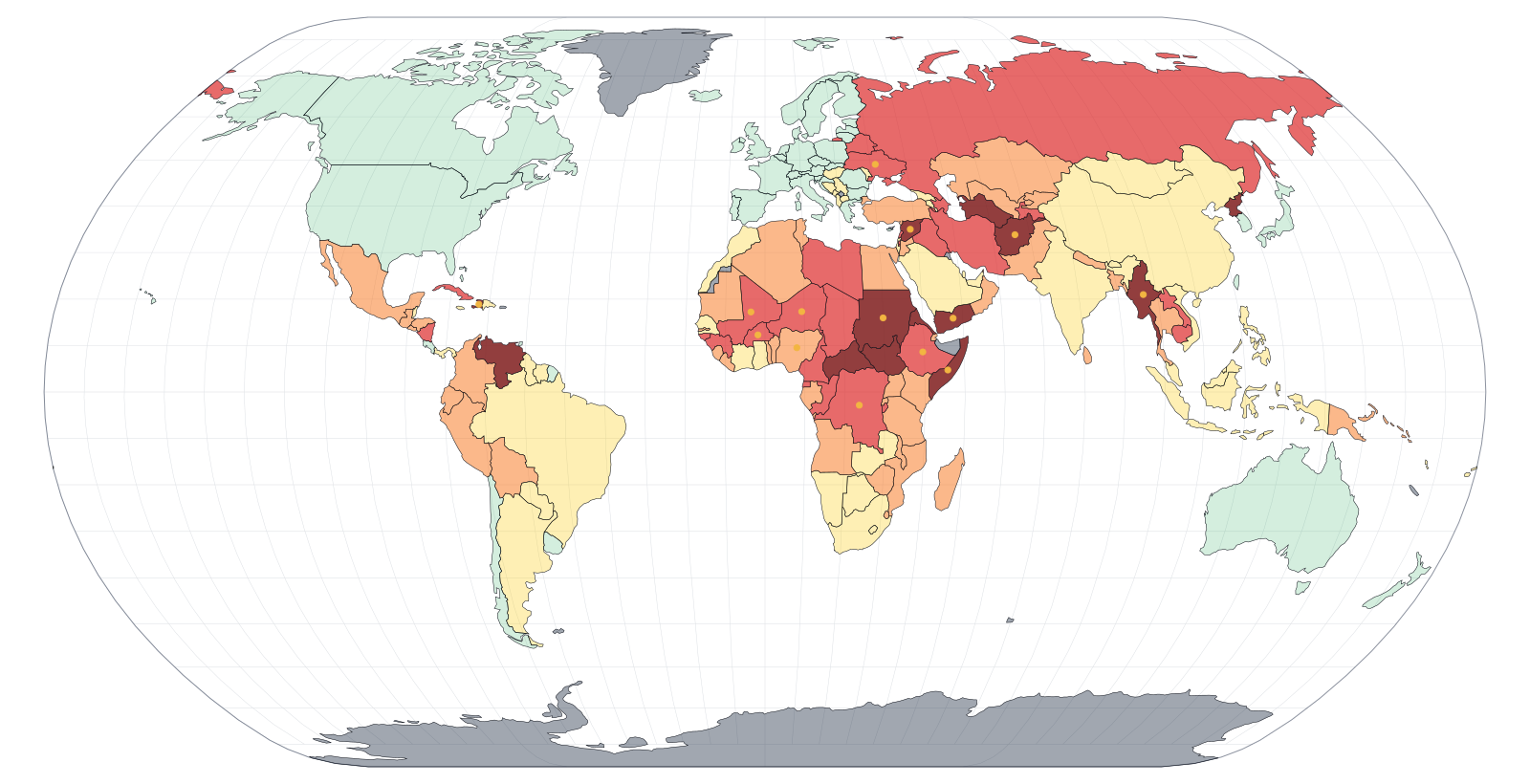
World map with live crisis markers
Market risk tier
Friendly
Moderate
Hard
Very hard
Extreme
Live crisis
Decades of fieldwork in the world’s hardest markets

You run the company.
The world runs the crises.

A true-to-life business and crisis simulator. Built from decades of fieldwork in conflict and crisis economies. Founded by a team nominated twice for the Nobel Peace Prize.

What sets it apart The only business simulator that fuses operational mastery with cultural and financial knowledge, delivering the actual skills that country managers working through a world of crisis need.
UN Working Group on Business & Human Rights 2024 & 2025 Nobel Peace Prize nominees Cambridge University Press authors Research profiled in the New York Times, Financial Times, The Economist, Foreign Policy, the BBC, and the Los Angeles Times Based on deep fieldwork in: Colombia · Myanmar · Lebanon · Iraq · Ukraine · DR Congo · Bangladesh · Philippines · Venezuela · Indonesia · Mexico · Nepal · and many more
PUNE agriculture ministry opens consultationLAGOS community council demands local hiringRIYADH royal court diwan opens to FMCGJAKARTA financial supervisory cycle reopensBUENOS AIRES currency controls tightenDHAKA port logistics disrupted PUNE agriculture ministry opens consultationLAGOS community council demands local hiringRIYADH royal court diwan opens to FMCGJAKARTA financial supervisory cycle reopensBUENOS AIRES currency controls tightenDHAKA port logistics disrupted
The idea

Most crisis training tells you the answer.
Force Majeure makes you live the consequences.

Run the cynical, extractive playbook and the scoring grinds you down. Run the community-embedded one and the same engine rewards you. The lesson is structural, derived from the math, and it widens as a player gets better. A skeptic can take the cynical path and watch it fail on the numbers, which is why this convinces people that a slide deck never could.

Thousands
cultural & economic crisis scenarios
~200
real-world markets
1B+
unique campaign paths
V-Dem · ACLED
calibrated to real data
Proven in the research. Practised in the game.

The authors’ 2021 Harvard Business Review study found that firms embedded in their communities were about 3× more likely to stay profitable and 9× more likely to survive a crisis. Knowing that is one thing. Force Majeure makes you do it: every quarter you weigh cost and speed against the community standing the evidence says decides who survives, and the scoring holds you to the consequences.


See it in motion

Guide your firm through real scenarios, from founding to exit.

These are real screens from the simulation. Here is what a turn looks like, from the brief that lands on your desk, to the decision you commit under pressure, to the way the world answers back.

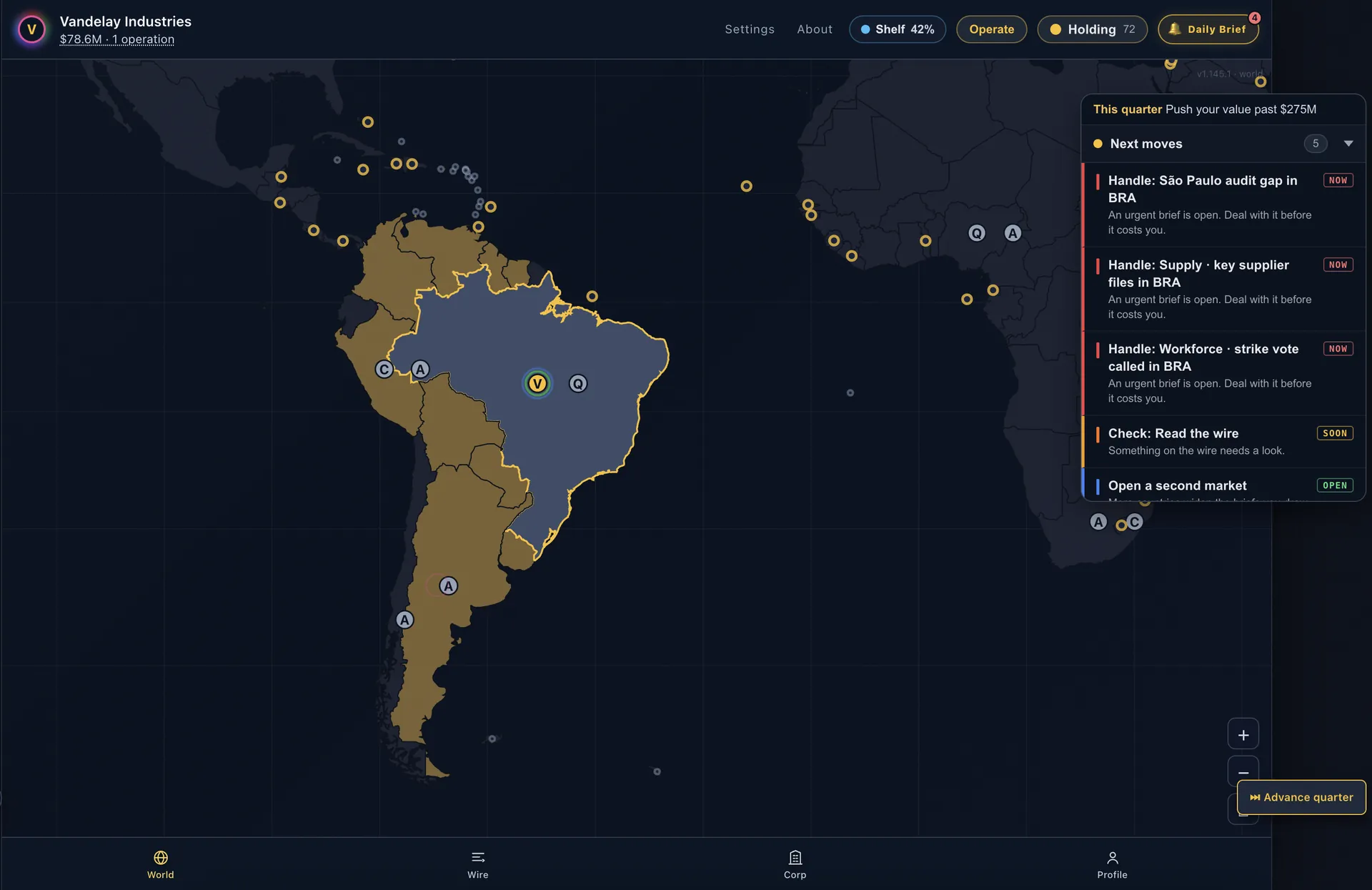
Force Majeure world map showing markets across South America with the quarter’s next moves open
The world reacts. Crises fire across your real markets as the campaign advances, each one a decision waiting on your desk.
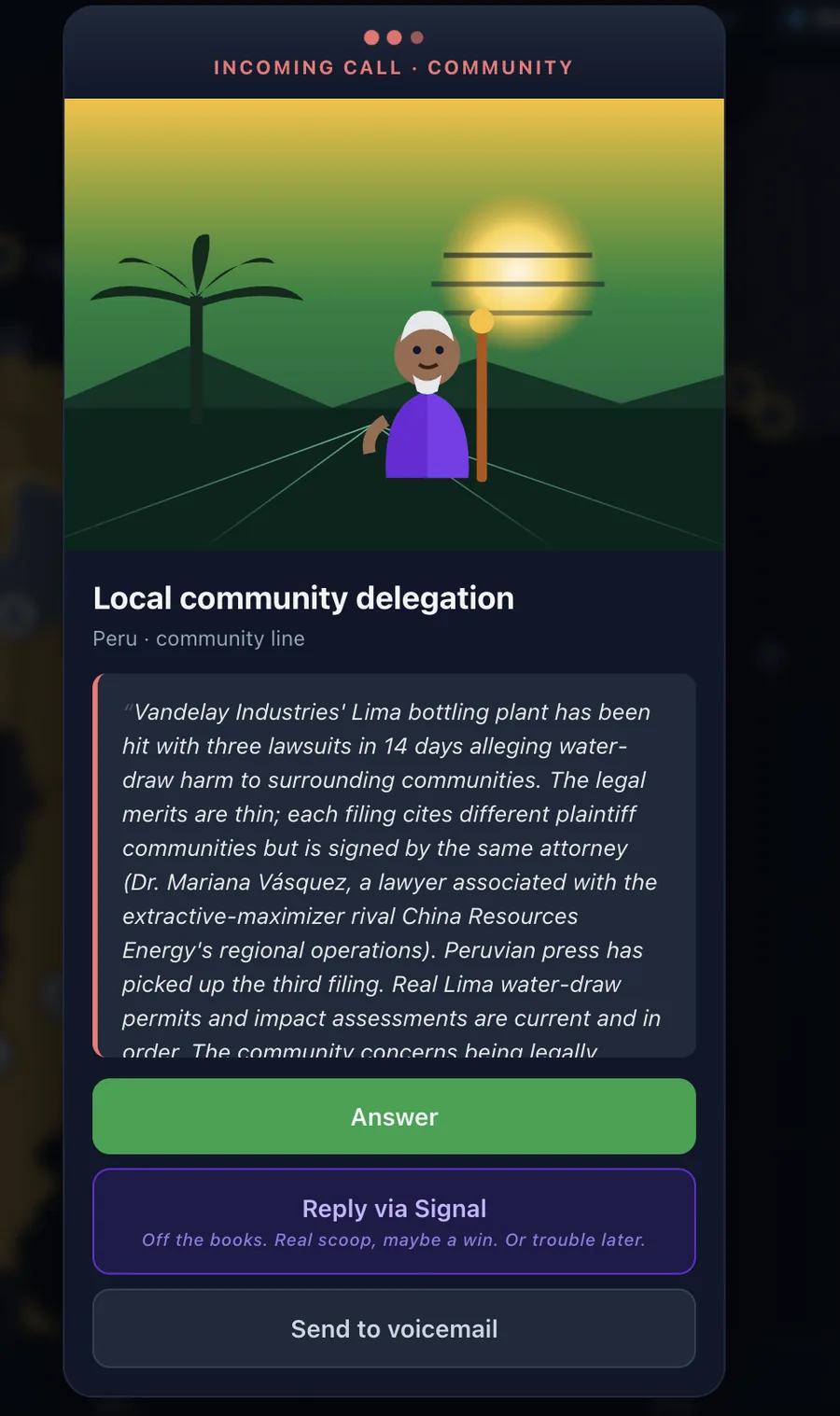
Force Majeure incoming call from a local community delegation with answer and reply options
You decide, under pressureA community delegation is on the line. Answer on the record, reply off the books, or let it ring.
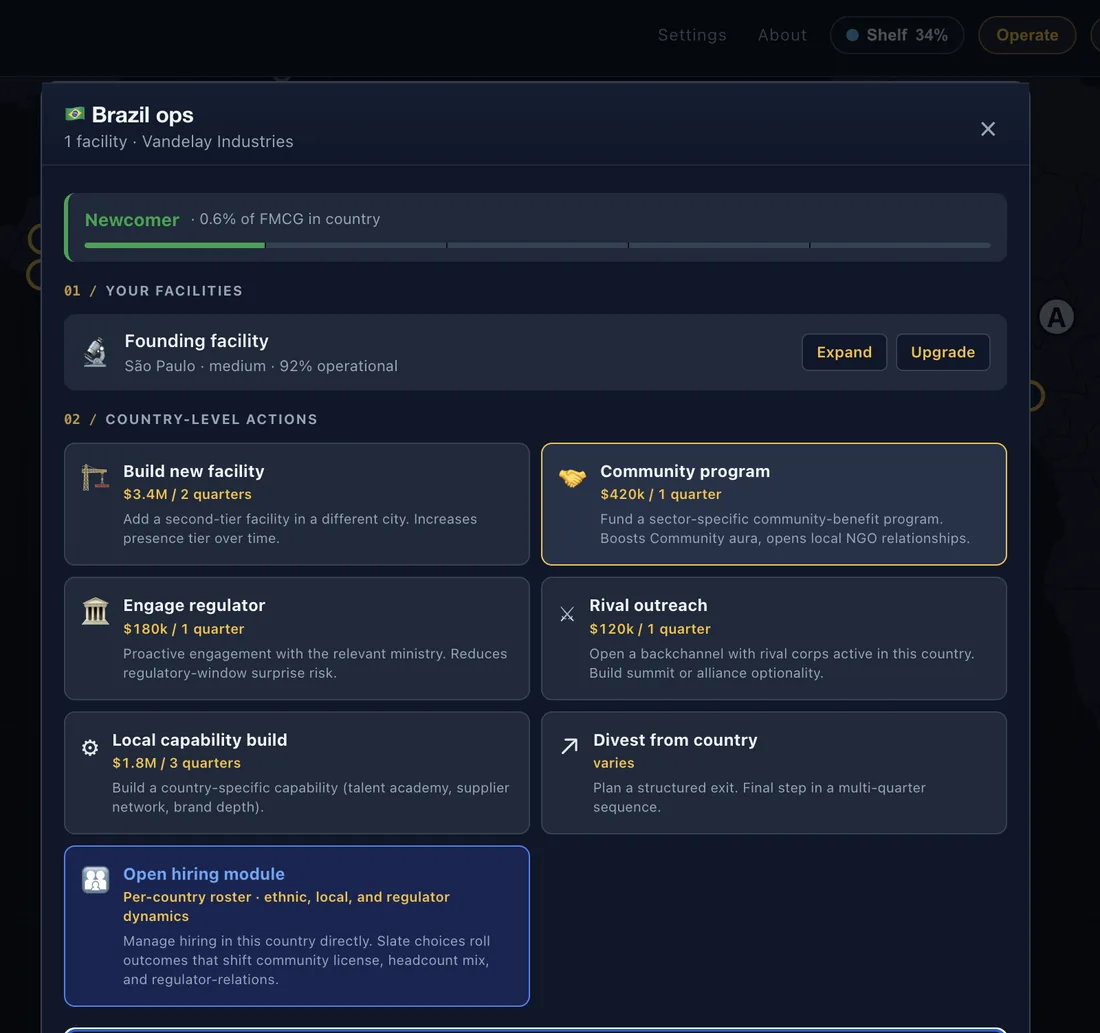
Force Majeure country operations panel for Brazil with facilities and country-level actions
Every market, modeledOpen a country and act: build, expand, engage the regulator, or fund the community.
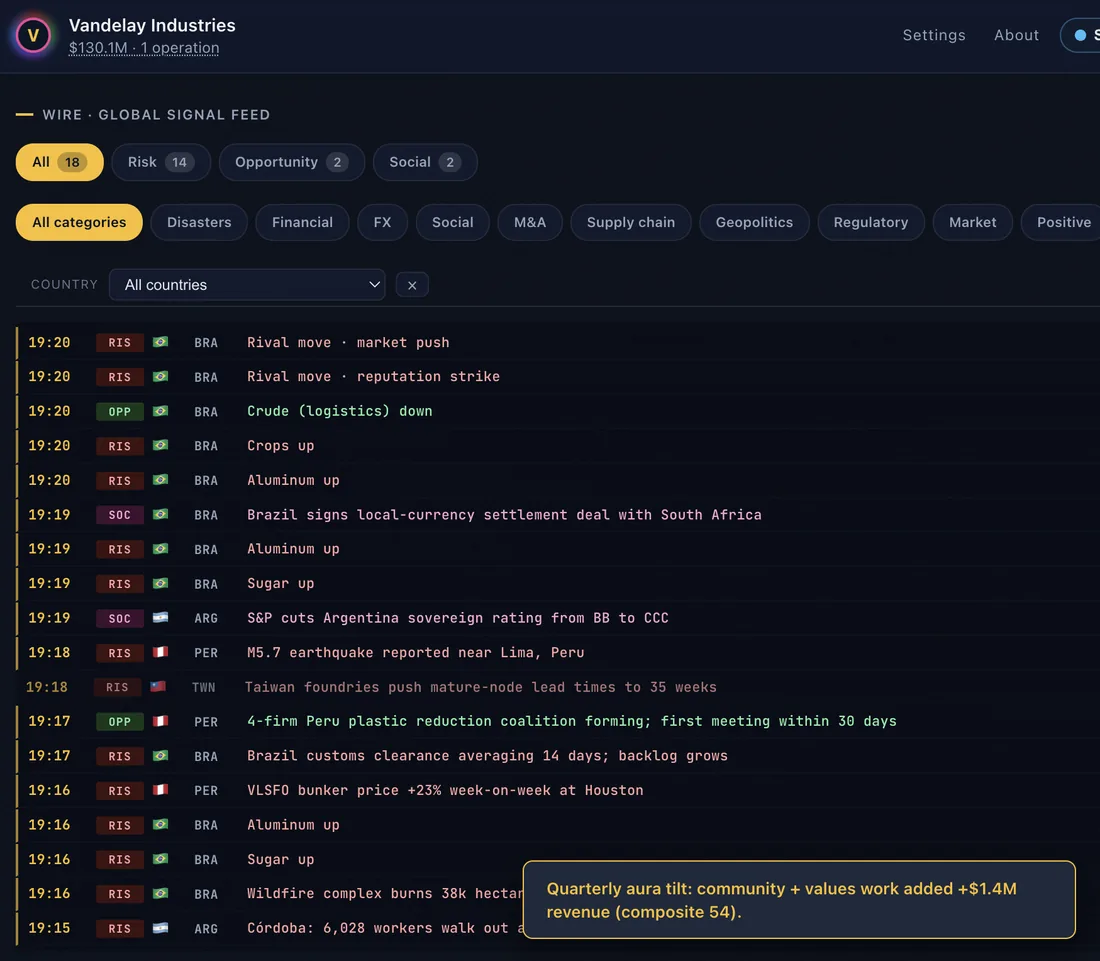
Force Majeure global signal feed showing risk, opportunity, and social items by country
Read the wireA live feed of risk, opportunity, and social signals across your footprint.

Two ways in

Built for the boardroom and the classroom.

For Organizations

Rehearse the crisis that is actually coming.

A rerunnable exercise on your real sector and country footprint, scored into a board-ready after-action report. Beyond the single-use tabletop, and far beyond cyber alone.

Enter the enterprise briefing →
For Educators

You teach the theory, your students live it in practice.

Free to play, mapped to the book chapter by chapter, with sophisticated scoring that rewards students who learn best practice, and a debrief they write themselves.

See the course kit →

New to the format? Read what a crisis simulation is, or browse the FAQ.